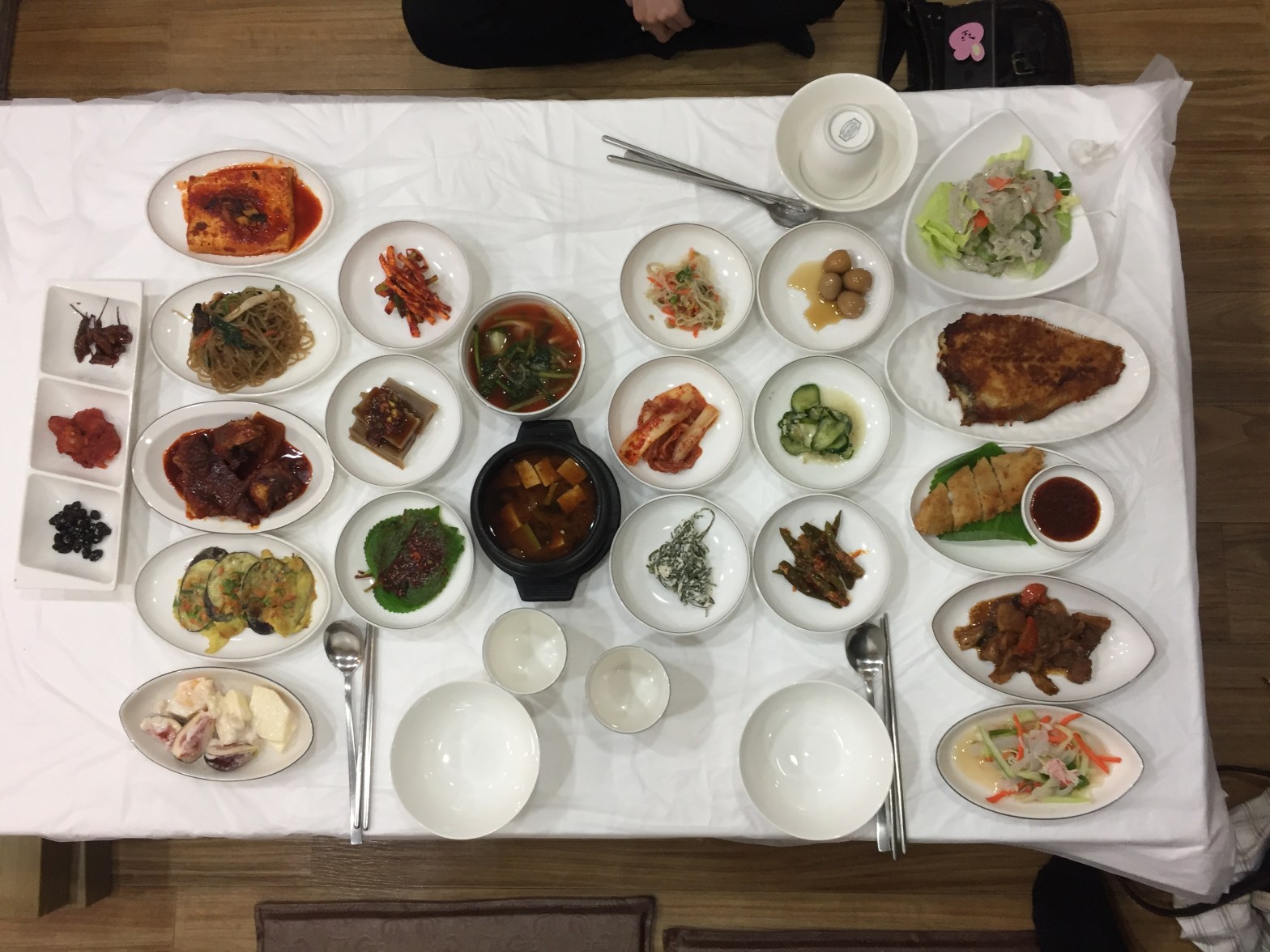
Honestly, I am by no means a food expert, nor do I have the photography skills (or the patience) to take nice pictures of my food before digging in, but I can say that the food here in South Korea is amazing! Below, I’ve listed six foods I’ve tried in South Korea that are delicious and definitely foods you should try if you ever visit.
NUMBER ONE: Dakgalbi 닭갈비
please!
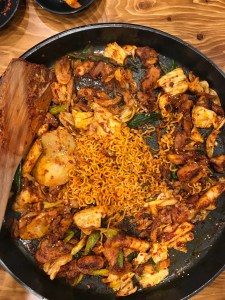
Dakgalbi is spicy stir fried chicken best served hot. It’s mixed with a spicy sauce called gochujang 고추장 (which is super good!) and served with rice cakes and ramyeon (at least in all my experiences). I first tried dakgalbi two days after moving to my city. My coordinator was showing a couple other new EPIK teachers and me around our city and we stopped at a dakgalbi place to eat. The chicken was really good and cut into small pieces with no bones, and we added rice cakes and ramyeon 라면 (Korean version of “ramen”) to our meal. With this meal, you can wrap the meat, rice cakes, and ramyeon in lettuce and eat it that way. The meal usually has some sort of green onions and sweet potato in the mix as well. Dakgalbi remains one of my favorite dishes in Korea thus far.
NUMBER TWO: Bibimbap 비빔밥
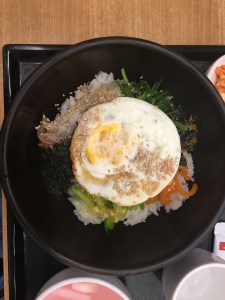
“Bibim” means mixed ingredients and “bap” means rice, making bibimbap a dish of cooked white rice topped with namul (sauteed and seasoned vegetables), fried egg, and kimchi. Whenever I have bibimbap, I add gochujang (chili pepper paste) to the mix for a little extra kick. My favorite way to eat this meal is in a stone bowl (called a “dolsot bibimbap”). Dolsot bibimbap and regular bibimbap are basically the same dish, just one is served in a stone bowl, which keeps the rice and vegetables warm from start to finish! This is another favorite meal of mine as you can never really go wrong with it!
NUMBER THREE: Tteokbokki 떡볶이
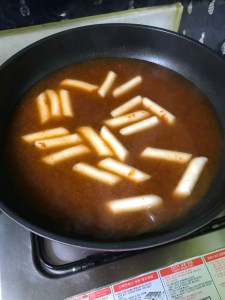
Tteokbokki is stir fried rice cakes, usually placed in a spicy sauce. I first tried these when I went to a dakgalbi place. The rice cakes were mixed in with the chicken, vegetables, and ramyeon. Rice cakes are very chewy and soft to eat, and can come in many different shapes. So far, they’re tasteless on their own, which is why they’re usually in a spicy sauce. I cooked my own for the first time a few weeks ago and they weren’t too bad! The sauce was definitely not as good as a restaurant, but it was decent for my first attempt.
NUMBER FOUR: Kimchi 김치
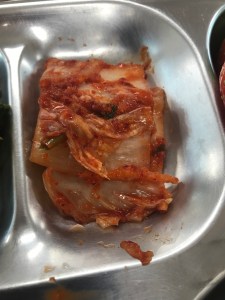
school lunch
Ah kimchi… The all-time favorite banchan of South Korea made from fermented cabbage and radish. I think I’ve eaten kimchi almost every single day, sometimes more than once during the day. The cabbage or radish (or both depending on the person making it), is mixed with various spices to create a spicy taste to it. Despite not enjoying the taste of kimchi in America, I can safely say I really like kimchi, especially the cabbage kind.
NUMBER FIVE: Hoppang 호빵
Hoppang is a warm snack usually eaten during the winter months in Korea. It’s made of warm fermented yeast filled with red bean paste, which gives it a sweet flavor. I had my first experience with hoppang for school lunch one day and accidentally mistook it for mandu since there is a mandu stand that sells hoppang near my apartment. The hoppang wasn’t warm for lunch, but my co-teacher told me that it tastes even better warm, so I’m excited to try it heated up! Sadly no picture was captured for this food.
NUMBER SIX: Tteok 떡
Another variation of a rice cake. Tteok is small oval-shaped rice cakes filled with sweet things. My favorite is steamed tteok, which is filled with brown sugar and red bean paste. I looked up how to make tteok online, so don’t take my word for how it’s actually made hehe. The main ingredients for steamed tteok are rice or glutinous rice or sometimes both mixed together. Other times, grains, beans, sesame seeds, wheat flour, or starch are mixed together with the rice to create the sticky, chewy texture. For the stuffing, anywhere from nuts and fruits to vegetables and honey can be added. After combining the ingredients, the rice is soaked in water for a while, then ground up. The rice is then placed in a steamer (called a “siru”) and steamed for a certain amount of time, depending on the type of tteok being made. Usually the rice is placed in a circular steamer in one big lump to later be cut into smaller bits. Then, the stuffings are added in after the cutting of the steamed rice. Designs may be added to the steamed tteok for a more aesthetically-pleasing rice cake.
To be completely honest, I’m not even sure “steamed tteok” is what I’m thinking of when I think about the tteok I’ve eaten. There’s just so much variation! I should take more pictures next time and ask a Korean friend what type of tteok it is.
I’ve tried many, many more foods during my four months in South Korea, some delicious and some that still make me shudder to think about. The more Korean food I eat, the more I love it. Maybe my next blog post should be on drinks I’ve had in Korea. There’s certainly some interesting ones out there!
 meghan-o in gangwon-do